



22 October 2025
by Stathis Maliakis
Wind Turbines & Forest Fires Coincidence or not?
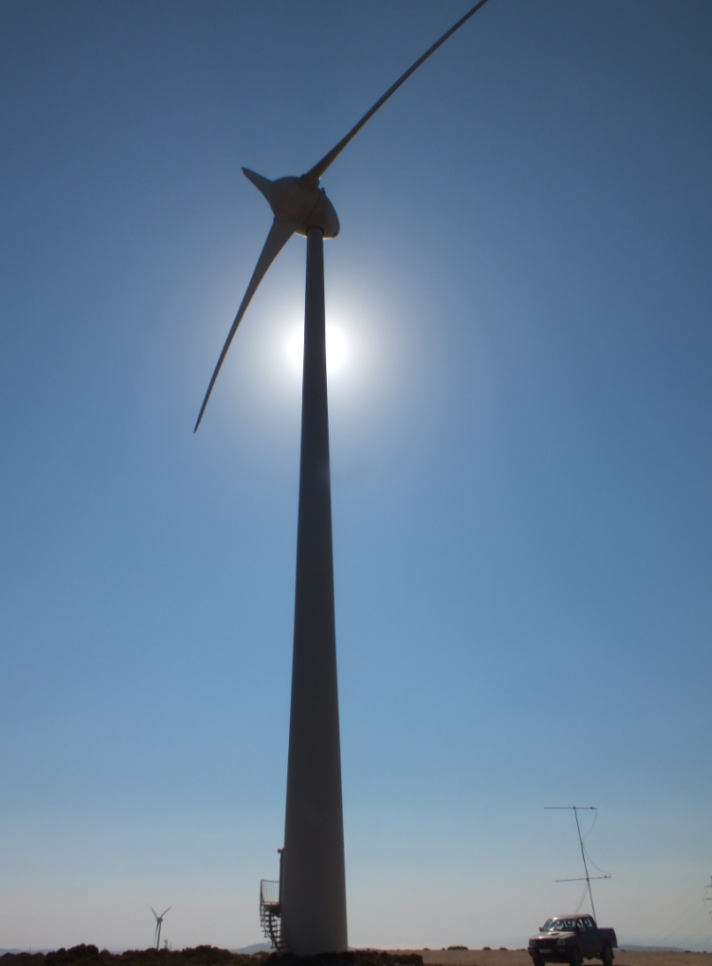
It was inevitable that wind turbines would eventually secure their place in the renewables podium, being the frontliner of the battle against climate change and environmental concerns. They were also seen as a profitable means to generate “clean” or “green” energy, considering that, at least from my own experience, wind turbine farms were exporting at full power to the grid at peak demand times, when electricity rate is significantly higher.
I am well aware of the infamous debate over how “green” the energy produced by the wind turbines is, given the amount of materials required to build one, the environmental impact from transporting one to mountain tops (opening roads through forests all the way to the top, polluting the vicinity of the installation area), and the cost and management of recycling a wind turbine’s materials when it reaches its end of life, following decommissioning.
However, all studies from accredited universities worldwide to date, have confirmed that the overall impact of a wind turbine’s life cycle, is positive for the environment. During the past few years, in particular, with the increase of Battery Energy Storage Systems (BESS) utilization and other mechanical energy storage methods (e.g. in pumped-storage hydro power plants), wind turbines started making a difference in how decarbonization and net-zero plans are progressing.
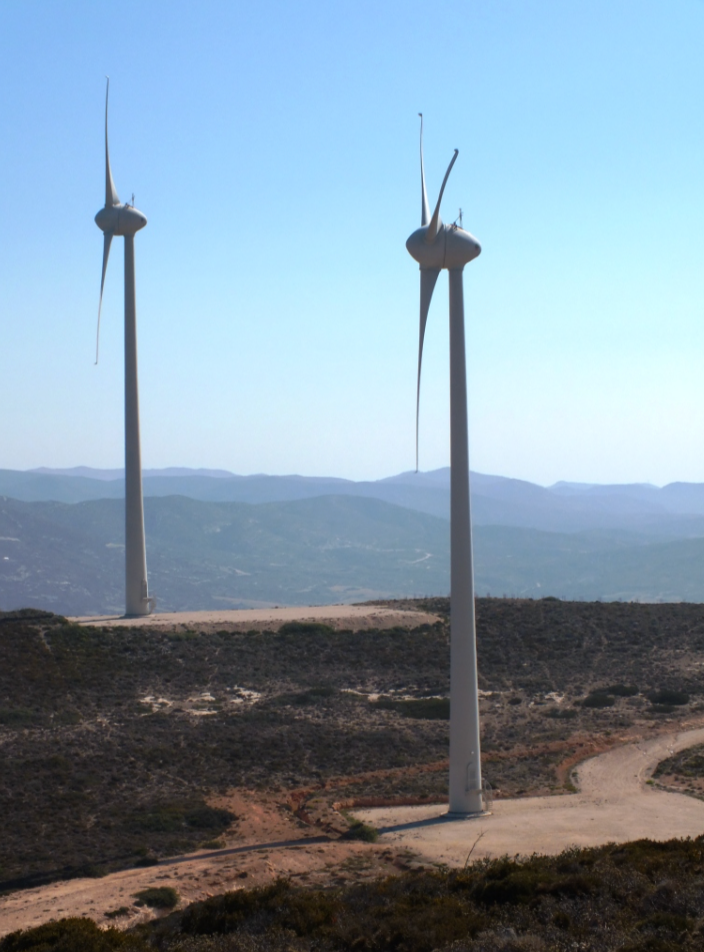
But, what about the actual man-made damage done to the environment, when deciding to plant a wind turbine on a mountain top? What are the consequences to the ecosystem, and what do the environmental impact studies say, in relation to the serenity of flora and fauna? Is mankind determined to put everything aside, in light of the GG “Green Growth”? What are we ready to sacrifice today to stabilize any climatic change, and to deliver a healthier Earth to the next generations?
Southern Europe countries have seen a deadly increase in forest wild fires during the past 2 decades. The data is simply jaw-dropping. The European Forest Fires Information System (EFFIS) of the Copernicus Emergency Management Service 1 , implemented by the JRC 2 , keeps a very well detailed record of all wildfires larger than 30 hectares in Europe, and an even more useful statistics portal. See below chart depicting the evolution of burnt area in EU, comparing the 2006-2024 average and year 2025 alone:
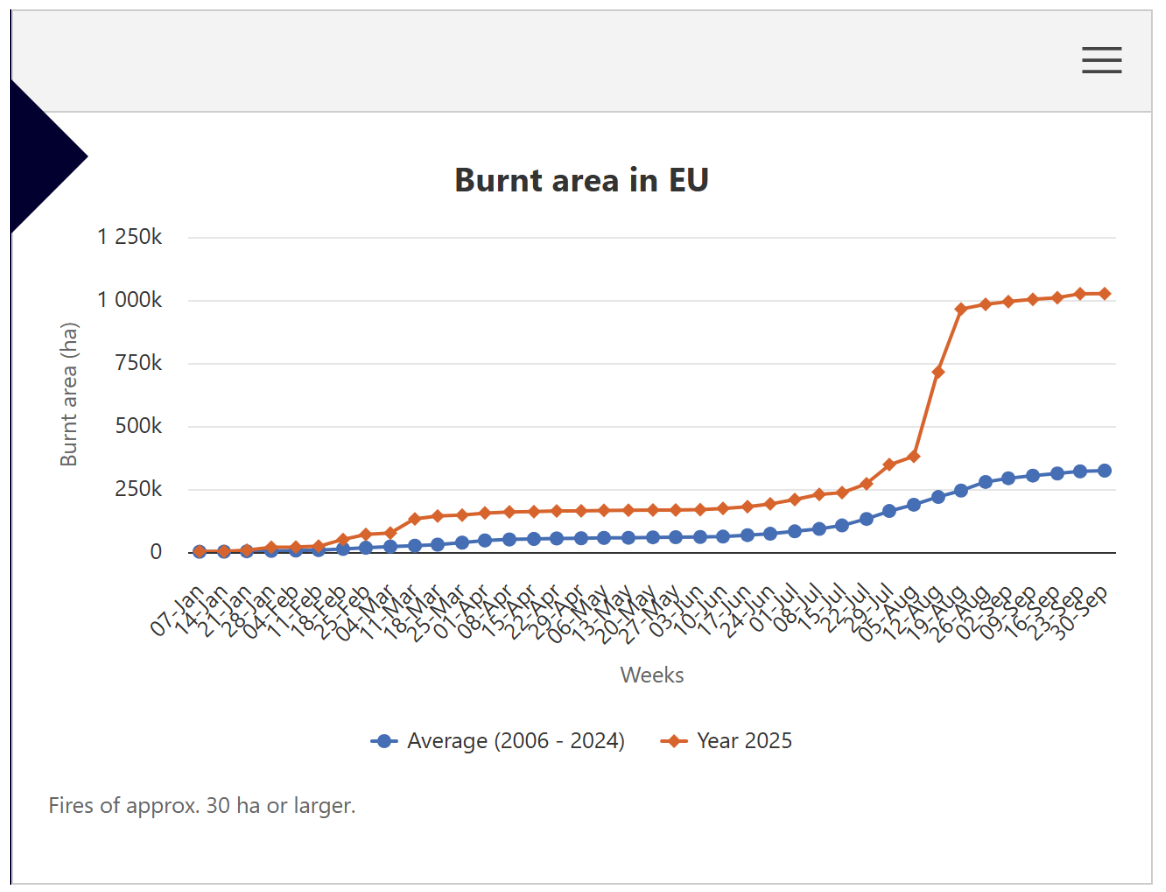
The graph above shows that the area affected by fires has reached 1,025,224 hectares in 2025, which is higher than the average of 323,135 hectares recorded for this time of year over the past 19 years (2006-2024). Let’s take a look at Southern Europe countries with the largest number of wind turbines installed, Greece, Italy, Spain, and Portugal, and observe the evolution of fires and burned area between 2002-2024, including the fire landcover type overview:
1 https://forest-fire.emergency.copernicus.eu/
2 https://joint-research-centre.ec.europa.eu/projects-and-activities/natural-and-man-made-
hazards/fires/current-wildfire-situation-europe_en , updated on 30 September 2025

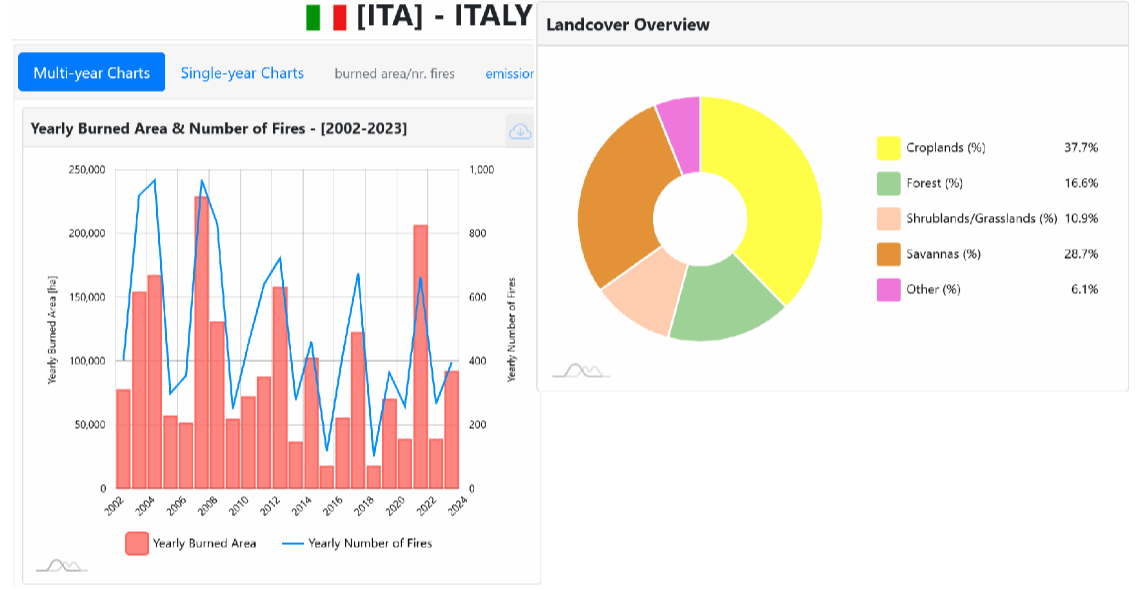


While Spain and Portugal seem to have suffered most from the worst wildfires, in terms of absolute burnt area, it is in fact Greece and Italy that lost the most forest area. See below table for a comparison (source: EFFIS Statistical Portal):

Of course, not all forest fires happened in mountainous areas, where wind turbine farm installations were planned for. Nor is it implied that forest fires are directly related to plans for such constructions. However, it is worth investigating the growth rate/trend of wind turbine additions to these countries during this period, and search for a certain pattern of correlation, as the principle of analogous events applies.
On this point, an important assumption must be made, that in case of a forest fire in a mountain, we would expect the addition of wind turbines there to occur between 1-3 years post the fire event, to account for soil remediation, land formation, licensing time, procurement/transport time, and erection time.
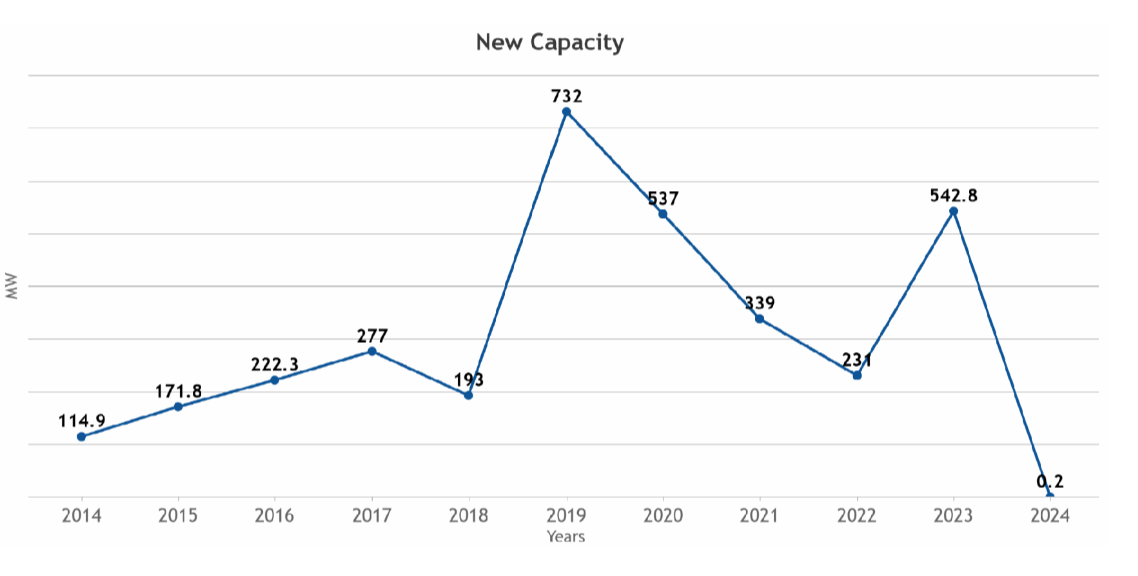
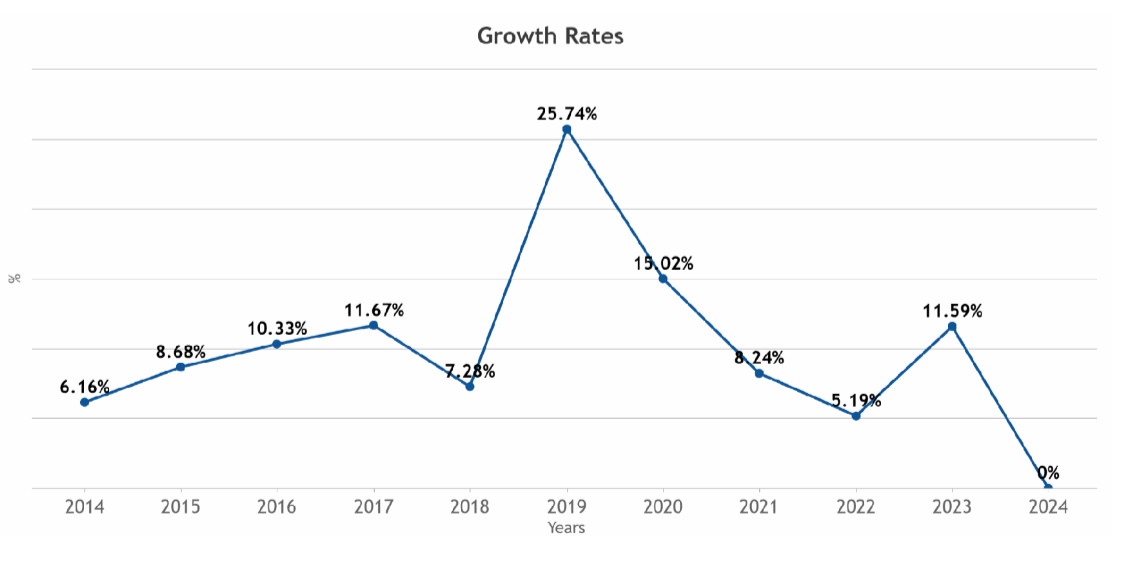
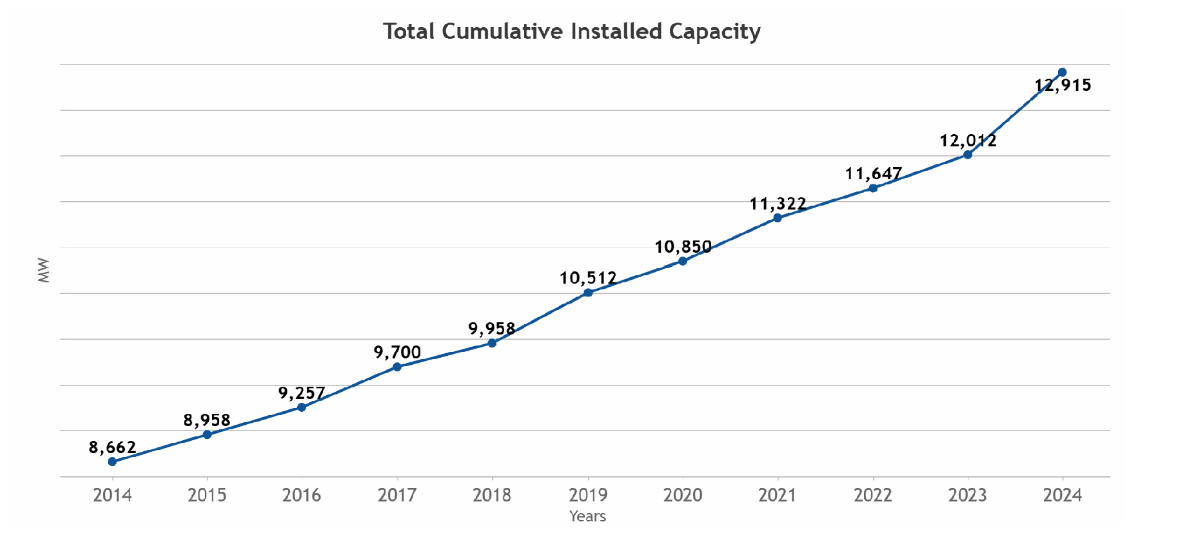
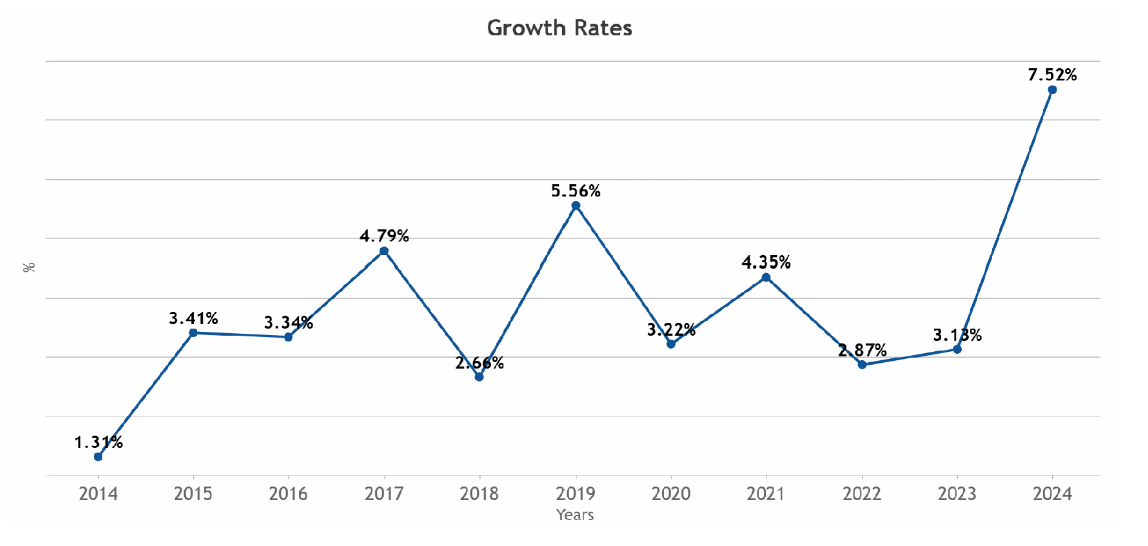
The Total Cumulative Installed Capacity (in MW), the New Capacity per Year (in MW), and the yearly Growth Rate charts, for the period between 2014 and 2024 (no data available for previous years) are presented below for Greece and Italy (which lost a lot of forest areas) 3 :
GREECE

ITALY

As an example, the location of a forest fire in Nafpaktia, Greece in August 2017, became the home of a wind turbine farm by July 2018 (less than a year). Photo below shown for reference:

From the comparison of the charts above, for Greece, the New Capacity added and the growth rate seem to follow the assumption made earlier. More specifically, the 2018-2019 and 2022-2023 spikes follow the 2015-2016 and 2020-2021 huge increase of yearly burnt area, respectively.
Similarly, in Italy, the 2016-2017, 2018-2019, and 2023-2024 growth rate spikes follow the 2013-2014, 2016-2017, and 2020-2021 increase of yearly burnt area, respectively. Again, no implication is made as to the connection between a forest fire in mountainous areas and the plans to plant new wind turbine farms. We can all agree, however, that there is a correlation pattern, irrespective of whether the installations are opportunistic or methodical.
Time to switch gears now, and investigate the technical side of things.
There are many self-pronounced scientists out there, who maintain that a wind turbine can indeed be installed in a forest, with no requirement to burn it down or proceed with land deforestation first.
Ok, but how would that affect the operation and performance of the wind turbine? Here are some basic facts to consider:
- In order for a wind turbine to perform properly, a laminar airflow is preferred over a turbulent one
- A forest around a wind turbine will cause disturbance to airflow and prevents the wind turbine from reaching the anticipated output, unless the turbine’s tower is so tall that the blades’ lowest tip height is quite higher than the forest tree tops. Of course, this creates more issues with structure integrity, etc., and additionally, the erection cost of the tower is exponentially increasing by height.
- If the hill, or the mountain, on top of which wind turbines are installed, has no vegetation, then the airflow towards the top is smooth and accelerated. However, if there is a forest, with tree variety in particular, then the laminar airflow will be broken and the air velocity reaching the turbine at the top is severely decreased. Further, a forest may cause updrafts which will reduce the air velocity, too.
- According to the wind park effect (or otherwise, wake effect), which refers to the lower wind speed behind each turbine within the wind farm, and also behind the wind farm as a whole, compared with in front of it, the optimum calculated distance between 2 wind turbines must be 7x the blades’ diameter. For example, for a 90m blades diameter, the optimum distance between 3 wind turbines should be 1260m. The land in between should be deforested, or burnt, to avoid the aforementioned effects. For the installations of 5 wind turbines of this example, we would require a deforested, or burnt, 3km+ mountain ridge.
- A wind farm on a mountaintop must be connected with a suitable HV substation. The overhead transmission line (OHTL) must not go over forests in a straight line. If these forests have burnt, then it’s easier to install the transmission towers, to optimize losses, and export energy in a more efficient way. We have to keep in mind that the energy losses of the transmission line connecting the wind farm with the HV substation are eventually paid by the end consumer, as it so happens in the majority of European countries.
- In a forest mountainous area, which usually is an inaccessible one, a wind turbine installation will require opening of a wide road through the forest, drainage works, and other significant geotechnical works, that may increase the budget dramatically.
- The cost and time to produce an environmental impact study for a wind farm project in a forest area is much more than that of a deforested, or burnt, area.
Overall, we can safely conclude that the existence of a forest makes a mountaintop area unattractive for planning a wind farm installation. Notwithstanding the additional costs to cope with all related issues such as, access, licensing, technical, and infrastructure, operating a wind turbine next to, or within, a forest area, is inefficient and probably deviating from the macroeconomic goals of the investors/funders. To summarize, it is preferable to install wind turbines where no vegetation or forests exist, to cut down on costs and to implement a technically acceptable installation. In areas where this is not possible, land deforestation or a forest fire may open the way to potential wind farm investments. While it cannot de categorically concluded that forest wildfires in Southern Europe countries are somehow related to plans to install new wind turbine farms, the statistical data show that there may be a correlation pattern between the increase of burnt forest area in these countries, and the addition of new wind capacity as well as increase of wind energy growth rate.
COINCIDENCE OR NOT? I guess it will take some time before we can reach a conclusion …

Written by: Stathis Maliakis
LinkedIn: Efstathios Maliakis
Efstathios (“Stathis”) is the Head of Power of DAC Consulting Services in EMEA. Stathis is a Senior Electrical Engineer with over 20 years of experience, having been for more than 10 years responsible for supervising the construction of Power Plants.

Come work with Us!
If you cannot carry out new cases in your current firms due to conflicts of interest, come work with us!
- Modern case management platforms
- Unrivalled team and admin support
- Clear and concise quality management systems
- Exceptional reputation
- Capacity to GROW
- Remote working
DAC is the future of working as an Expert Witness.